
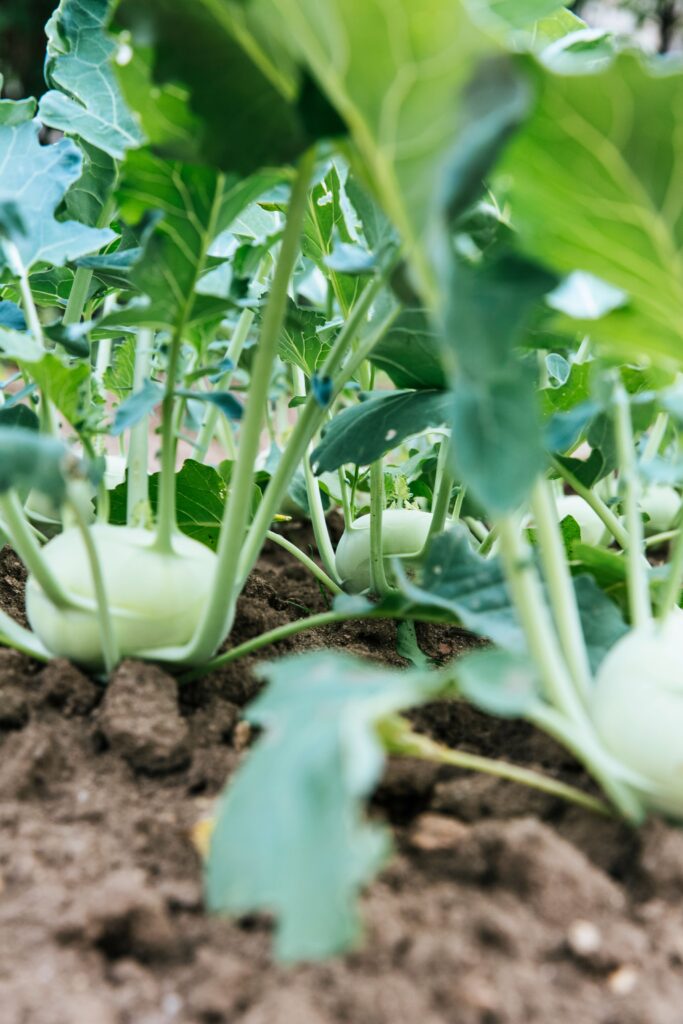
If you’ve ever walked through a garden center or farmers’ market and spotted a round, alien-looking vegetable with leaves sticking out of the top, chances are you’ve met kohlrabi.
At first glance it looks a little intimidating, but don’t let its appearance fool you. Kohlrabi is actually one of the easiest vegetables you can grow, and it’s surprisingly delicious. It has the crisp texture of an apple, the mild sweetness of broccoli stems, and just a hint of cabbage flavor.
Even better? It’s fast-growing, doesn’t take up much space, and can be grown in both spring and fall.
Here’s everything you need to know to grow a bumper crop of fresh, crunchy kohlrabi.
What Exactly Is Kohlrabi?
Kohlrabi (pronounced coal-ROB-ee) is a member of the cabbage family alongside broccoli, kale, cauliflower, Brussels sprouts, and cabbage.
Despite looking like a root vegetable, the edible bulb actually grows above ground. It’s a swollen stem rather than a root.
Both the bulb and the leaves are edible, making it one of the most versatile vegetables in the garden.
When to Plant Kohlrabi
Kohlrabi loves cool weather.
The ideal growing temperature is between 10°C and 24°C (50°F to 75°F).
Spring Crop
Plant seeds:
- 4–6 weeks before your last expected frost
- As soon as the soil can be worked
Fall Crop
For many gardeners, fall is actually the best season.
Plant seeds:
- 6–10 weeks before your first fall frost
Cool autumn temperatures make the bulbs sweeter and more tender.
Choosing the Right Spot
Kohlrabi grows best in:
- Full sun (6–8 hours daily)
- Rich, fertile soil
- Well-draining soil
- Soil pH between 6.0 and 7.5
Mix compost into the soil before planting to give young plants plenty of nutrients.
Starting from Seed
Most gardeners grow kohlrabi directly from seed.
Plant seeds:
- ¼ inch (6 mm) deep
- About 2 inches apart
Once seedlings have several leaves, thin them so plants are spaced:
6–8 inches apart
Rows should be around:
18 inches apart
Don’t throw away the thinned seedlings—they’re edible and taste great in salads.
Watering
Consistency is the secret to tender bulbs.
Aim for:
- About 1 inch of water per week
- More during hot, dry weather
Uneven watering can make bulbs woody or cause them to split.
Adding mulch around the plants helps keep moisture in the soil while reducing weeds.
Fertilizing
Kohlrabi isn’t a heavy feeder, but it appreciates nutrient-rich soil.
If your soil is average:
- Add compost before planting.
- Feed once midway through the season with a balanced vegetable fertilizer.
Avoid too much nitrogen, which encourages leaves instead of bulb growth.
Common Problems
The good news?
Kohlrabi is fairly trouble-free.
Still, watch for a few common pests.
Cabbage Worms
Tiny green caterpillars love brassicas.
Check leaves regularly and remove them by hand if you spot any.
Flea Beetles
These tiny jumping beetles leave dozens of small holes in leaves.
Floating row covers work well early in the season.
Aphids
A strong spray of water usually knocks them off.
Ladybugs also make excellent natural pest control.
How Long Does Kohlrabi Take to Grow?
One of the best things about kohlrabi is how quickly it matures.
Most varieties are ready in:
45–60 days
Some baby varieties mature in as little as 40 days.
When to Harvest
Timing makes all the difference.
Harvest bulbs when they’re about:
- 2–3 inches across for the sweetest flavor
- Up to 4 inches for larger varieties
If you leave them too long, they become tough and woody.
Use a sharp knife or pruning shears to cut the stem just below the bulb.
Don’t forget the leaves—they’re excellent sautéed like spinach or added to soups.
Storing Your Harvest
Fresh kohlrabi keeps surprisingly well.
For best storage:
- Remove the leaves first.
- Store bulbs in the refrigerator.
- Place them in a perforated plastic bag.
They’ll often stay fresh for 2–4 weeks.
Best Companion Plants
Kohlrabi grows well beside:
- Beets
- Lettuce
- Spinach
- Onions
- Bush beans
- Herbs like dill and chamomile
Avoid planting it close to:
- Tomatoes
- Pole beans
- Strawberries
Can You Grow Kohlrabi in Containers?
Absolutely.
Choose a container that’s:
- At least 12 inches deep
- 12–16 inches wide
- Filled with quality potting mix
Keep containers watered more frequently since they dry out faster than garden beds.
How to Eat Kohlrabi
If you’ve never tasted it, you’re in for a surprise.
Peel away the tough outer skin and enjoy it:
- Raw with dip
- Sliced into salads
- Roasted with olive oil
- Stir-fried
- Mashed like potatoes
- Added to soups
- Pickled
The leaves can be cooked exactly like kale or collard greens.
Tips for Growing Perfect Kohlrabi
Here are a few tricks that make a big difference:
- Grow it during cool weather.
- Water consistently.
- Harvest while the bulbs are still young.
- Succession plant every two weeks for a continuous harvest.
- Add compost before planting.
- Watch for cabbage worms early.
And Finally…
Kohlrabi might not win any beauty contests, but it easily earns a place in the vegetable garden. It’s fast-growing, low-maintenance, and rewards you with crisp, sweet bulbs that are as versatile in the kitchen as they are easy to grow.
Whether you have a sprawling backyard, a raised bed, or just a few containers on the patio, kohlrabi is a fun crop that offers something a little different from the usual tomatoes and peppers. Give it a try this season—you may discover a new favorite that’s as enjoyable to grow as it is to eat.