
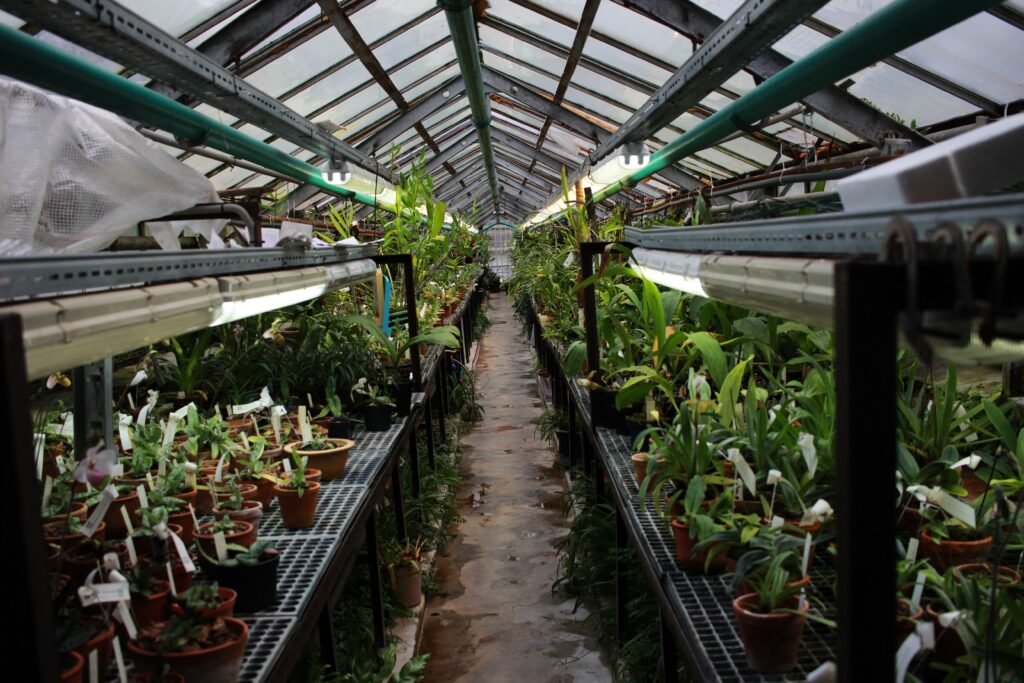
So you’ve decided to get a greenhouse. Good call. Tomatoes in April, herbs all winter, seedlings that don’t take over your kitchen windowsill. But once you start shopping, the options get overwhelming fast. Here’s what I’d think about before spending a penny.
Start with the spot, not the greenhouse
It’s tempting to browse first, but walk around your garden instead. You want a spot with at least 6 hours of good sun, ideally with the long side facing south so plants get light all day. Check for level ground, too. Building on a slope is a headache you don’t need. And keep it away from big trees, which drop leaves, cast shade, and drip sap on everything.
Also think about access. You’ll want water and maybe power nearby, and a path you’ll actually walk in the rain.
Size: go bigger than you think
Almost everyone says the same thing a year later: “I wish I’d bought a bigger one.” Plants multiply, and so do your ambitions. If you’re torn between two sizes, pick the larger one. Just check your local rules first, since some areas have limits on structures in the garden.
Frame material
Aluminum: Lightweight, rust-proof, and low maintenance. Great all-rounder, though it can lose heat faster.
Wood: Gorgeous and a good insulator, but it needs regular treatment to keep it from rotting.
Steel: Strong, but it can rust if the coating gets damaged.
Plastic/PVC: Cheap and cheerful, fine for a starter, but not built for harsh weather.
Glazing: what covers the frame
Glass looks lovely and lasts forever, but it’s heavy, pricey, and can shatter. Horticultural glass is worth it if you can swing it.
Polycarbonate is my pick for most people. It’s tough, retains heat well, and diffuses light so plants don’t scorch. Twin-wall is better for cold climates.
Polyethylene film is the budget option. It works, but expect to replace it every few years.
Ventilation matters more than you’d guess
A greenhouse without good airflow turns into a sauna by noon. Look for roof vents and at least one side vent or louvre, and think about an automatic vent opener if you’re not home during the day. Proper airflow also helps prevent mold and mildew, which love stuffy, damp air.
Doors and the little details
Check the door width. You’ll be pushing wheelbarrows and hauling pots, and sliding doors are handy in tight spaces. Look for a solid base or foundation kit, guttering for a rain barrel, and shelving options. Small extras like these make daily use so much nicer.
Think about your climate
Cold winters? Prioritize insulation: twin-wall polycarbonate, a solid base, and maybe a small heater later. Hot summers? Focus on ventilation and shade netting. There’s no perfect greenhouse, only the right one for where you live.
Set a realistic budget
Don’t forget the extras: the base, delivery, shelving, a thermometer, and maybe heating or a water butt. A slightly pricier, sturdier greenhouse usually beats a cheap one that blows over in the first storm. Trust me, nothing is more heartbreaking than a collapsed greenhouse full of seedlings.
The quick checklist
Sunny, level spot with easy access
Bigger than you think you need
Frame and glazing that suit your climate and effort level
Plenty of ventilation
Sturdy base and good door access
Budget that includes the extras
Take your time, and don’t be afraid to visit a garden center and poke around a few display models. Once yours is up, you’ll wonder how you ever gardened without one. Happy growing! 🌱